by
by 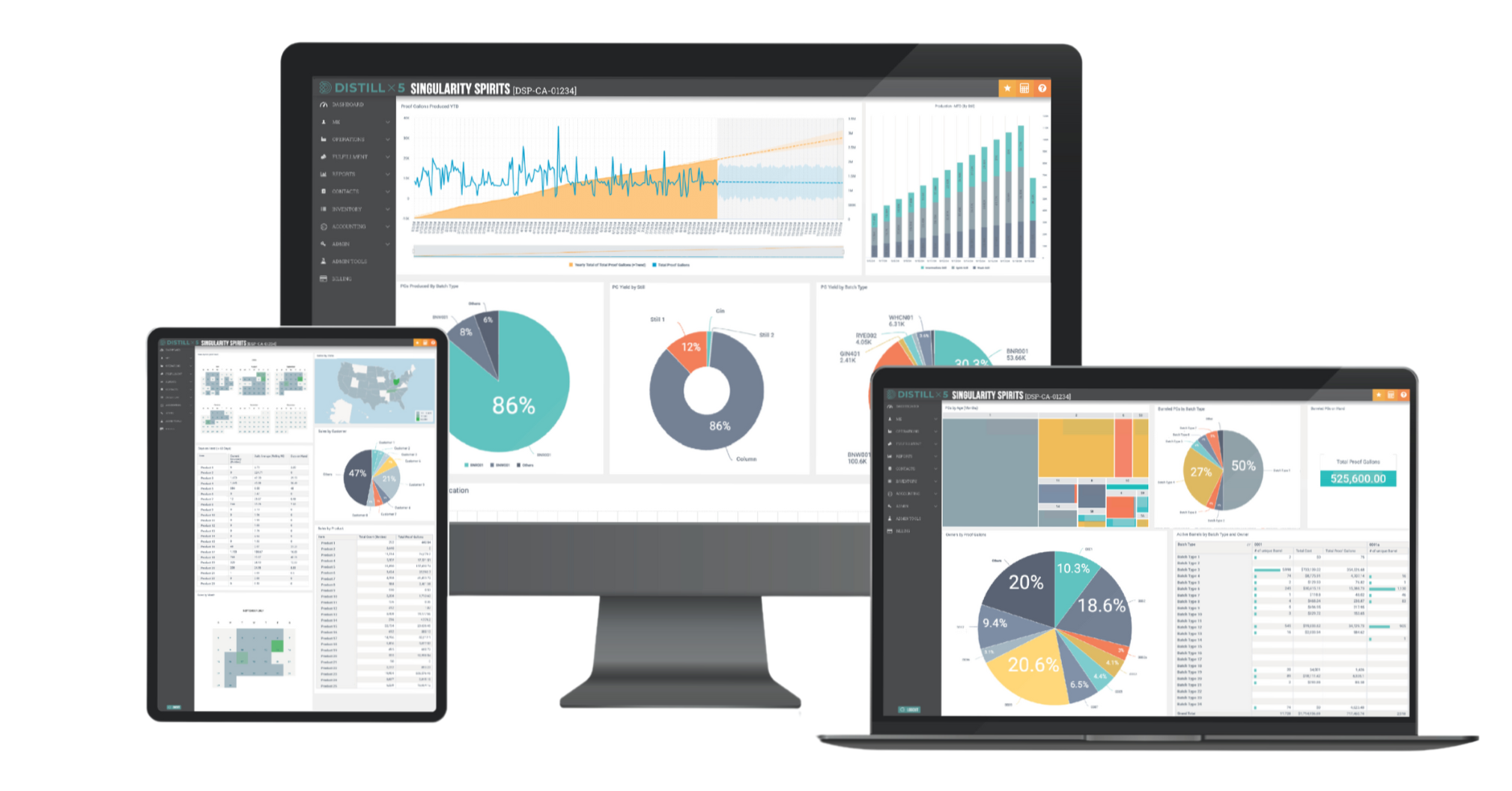
A data-driven look at a craft spirits industry entering its Systems Era.
For anyone scanning top-level metrics from the latest Craft Spirits Data Project, it would be easy to conclude the craft spirits market trends show an industry contracting. Volumes softened. Fewer producers were counted. Investment slowed. Employment dipped.
But that reading misses the real story.
The craft spirits category did not lose relevance, it lost patience for inefficiency.
What shifted was not demand; it was tolerance for operational complexity without the systems required to support it.
The industry didn’t collapse.
It leveled up.
It matured.
As we head into 2026, one truth stands out:
The craft spirits market now rewards clarity and operational discipline while penalizing complexity that lacks control.
What the Latest Data Actually Tells Us
Headline numbers:
- U.S. craft spirits volume declined ~6% YoY to 12.7M 9L cases
- Retail value decreased a far milder ~3%, settling at ~$7.6B
- Volume share slipped to 4.5%, while value share held at 7.5%
- Counted producers fell from 3,069 → 2,282, due in part to stricter definitions
- Industry investment declined for the first time in years
- Employment dipped slightly from ~29,400 to ~28,600
At a glance, this reads like contraction.
In context, it reads like consolidation and maturation.
Even as volumes softened, price integrity held. Consumer willingness to pay a premium for well-made craft spirits remains strong. Craft over-indexes on value relative to volume, a sign of sustained category strength.
This is not a category losing relevance.
This is a category losing slack.
A Market That Rewards Discipline, Not Excess
Consumers didn’t abandon craft spirits. They simply became more selective. The data reflects tightening tolerance for:
- Bloated SKU portfolios
- Inconsistent production quality
- Confusing brand positioning
- Price points unsupported by real operational excellence
The winners are distilleries with disciplined SKU strategies, operational systems that eliminate friction, and pricing tied to clear unit economics.
Those who are struggling are the ones still managing production, warehousing, compliance, and forecasting on spreadsheets stitched together by tribal knowledge.
The Distillery Decline: Concentration, Not Collapse
One of the most dramatic datapoints, the 26% drop in counted distilleries, can appear alarming. But nuance matters:
- Active producers declined ~26%
- Craft volume declined ~6%
If the industry were collapsing, volume would fall proportionally. It didn’t.
Production didn’t disappear.
It consolidated.
Fewer distilleries now produce a larger share of total output, not because scale magically protects them, but because scale requires and rewards strong systems:
- Stable production planning
- Accurate inventory
- Multi-state compliance
- Multi-DSP operational visibility
- Predictable cash flow management
The producers thriving at scale are the ones that built infrastructure to support complexity.
Margin, Not Volume, Became the New Signal
Key indicators support a critical shift:
- Volume fell faster than value (−6.1% vs −3.3%)
- Value share remained strong at 7.5%
- Premium tiers held ground better than lower-margin offerings
This is what it looks like when the industry begins rewarding:
- Contribution margin over case velocity
- Production discipline over SKU proliferation
- Operational integrity over “growth optics”
Distilleries that optimized for profitable, predictable outcomes survived turbulence.
Those that scaled without systems faced cost leakage, compliance risk, and cash flow strain.
Operational Realities the Data Exposes
Beneath the numbers lies a divide between distilleries with systems and distilleries without them.
As growth slowed and investment tightened, operational weaknesses that once hid beneath top-line momentum surfaced:
- Inventory inaccuracy
- Manual reporting bottlenecks
- Cost variance and COGS unpredictability
- Compliance penalties and TTB exposure
- Warehouse misalignment
- Cash flow gaps driven by inconsistent production or aging
These issues are not inherent to craft spirits. They are inherent to running a distillery without integrated operational infrastructure.
The Rise of Home-State Economics
The new data reveals a significant pivot toward channels with:
- Higher margins
- Lower logistical complexity
- Shorter cash cycles
- Reduced compliance risk
From 2022–2024:
- DSP/on-premises share increased to 25.7%
- Home-state sales held steady around 22–23%
- Other-state and export sales declined
For small producers, home-state channels now account for ~95% of volume.
This is not retreat.
It’s recalibration around what works, operationally and economically.
What This Means for 2026 and Beyond
As the market transitions from correction to separation, growth will not stop, it will concentrate around distilleries that can prove operational maturity.
Distilleries positioned to win will:
- Focus on fewer, better-performing SKUs
- Understand contribution margins by channel
- Manage barrels, warehouses, and production with precision
- Forecast confidently, not instinctively
- Automate compliance and reporting
- Use data, not intuition, to drive decisions
This is the future of craft spirits.
It is a future defined not by creativity alone, but by operational control.
The Quiet Through-line: Craft Spirits Has Entered a Systems Era
This is the most important insight from the data. The distilleries that will thrive next aren’t the most ambitious, they’re the most systemized. They have replaced friction-filled, manual workflows with connected, enterprise-ready operational platforms.
And this is exactly where Fx5 becomes a strategic advantage.
what if your distillery could think one step ahead with built in business intelligence?
Why Fx5 Exists, and Why It Matters Now
Fx5 was built for this moment, for distilleries operating at the intersection of complexity, compliance, scale, and margin pressure.
Across the U.S. and 20 countries, Fx5 is the operational backbone for producers who have outgrown spreadsheets, fragmented tools, and manual reporting.
Fx5 gives distilleries what this market now demands:
1. Unified operational visibility
- From grain to glass, every batch, barrel, bottling run, and compliance movement in one system.
2. Warehouse & Barrel Management that eliminates guesswork
- Real-time aging, location tracking, multi-site visibility, and loss management calibrated for enterprise environments.
3. Automated compliance and reporting
- TTB-aligned, audit-ready, multi-DSP capable, without the end-of-month chaos.
4. Insights-driven forecasting and decision intelligence
- Dx5 Insights transforms operational data into margin clarity, SKU profitability visibility, and predictive planning.
5. Enterprise hosting and infrastructure
- Security, stability, and scalability for multi-state, multi-facility operators.
6. A partner ecosystem built for the next era
- Consultants, educators, and technology partners aligned around operational excellence.
The distilleries winning today are the ones treating operations like a system, not a series of independent tasks. And Fx5 is the system.
As the industry enters this new systems era, Fx5 is committed to continually investing in the products, tools, and partnerships that help distilleries navigate this reality with confidence. In the coming year, we are expanding the Fx5 ecosystem with a series of new integrations across the distillery supply chain, enhanced financial tools, lot tracking, next-generation barrel management features, and entirely new modules for production planning and advanced forecasting.
Our goal is simple.
Dx5 will become the central operational hub for every distillery, connecting the systems you rely on, automating the work that slows you down, and giving you the clarity needed to compete in a more disciplined market.
Whether through native capabilities or strategic partners, we continue to build solutions that remove friction, increase visibility, and solve the everyday operational challenges distillers face. Our platform is designed to grow with you, integrates with your entire ecosystem, and helps you thrive in a market that now rewards operational excellence above all else.
Proof From the Field
Distilleries using Fx5 have achieved:
- Dramatic reductions in inventory variance
- More accurate barrel and warehouse modeling
- Faster production planning cycles
- More predictable margins
- Streamlined audits and fewer compliance risks
- Significant reductions in manual reporting
- Stronger cross-site operational coordination
This is what operational maturity looks like.
And it’s what the new era of craft spirits requires.
Build for the Market That Exists, Not the One That Used to Exist
The craft spirits industry has grown up. Complexity has increased. Margins matter. Systems matter even more.
If you’re a multi-DSP operator, a growing regional producer, or an enterprise distillery navigating scale, now is the moment to evaluate whether your operational infrastructure is built for the next decade.
Fx5 can help.
📆 Schedule Your Operations Review
Click the link above to meet with our enterprise team and assess your systems, identify operational risk, and see how leading distilleries are using Fx5 to simplify operations, strengthen margins, and scale with confidence.
The future of distilling belongs to those who master complexity.
Let’s build that future together.
Data sourced from: The Craft Spirits Data Project & ACSA